When parents first explore Guidepost Montessori, they often ask a simple question:
What will my child actually learn here?
It is a fair question. And it deserves a clear answer.
At Guidepost Montessori, your child will not simply memorize letters or count to 100. They will build the foundation for how they think, how they focus, how they solve problems, and how they see themselves in the world.
They will learn how to read.
They will learn how to write.
They will master mathematics in ways that feel intuitive and joyful.
But more than that, they will learn how to concentrate.
How to persist.
How to regulate themselves.
How to contribute to a community.
They will learn how to become capable.
And that journey begins from the very first day they enter a Guidepost Montessori classroom.

Learning Designed for How Children Actually Develop
Guidepost Montessori follows the developmental science and classroom practices pioneered by Maria Montessori. Her insight was profound: children learn best when education aligns with their natural stages of growth.
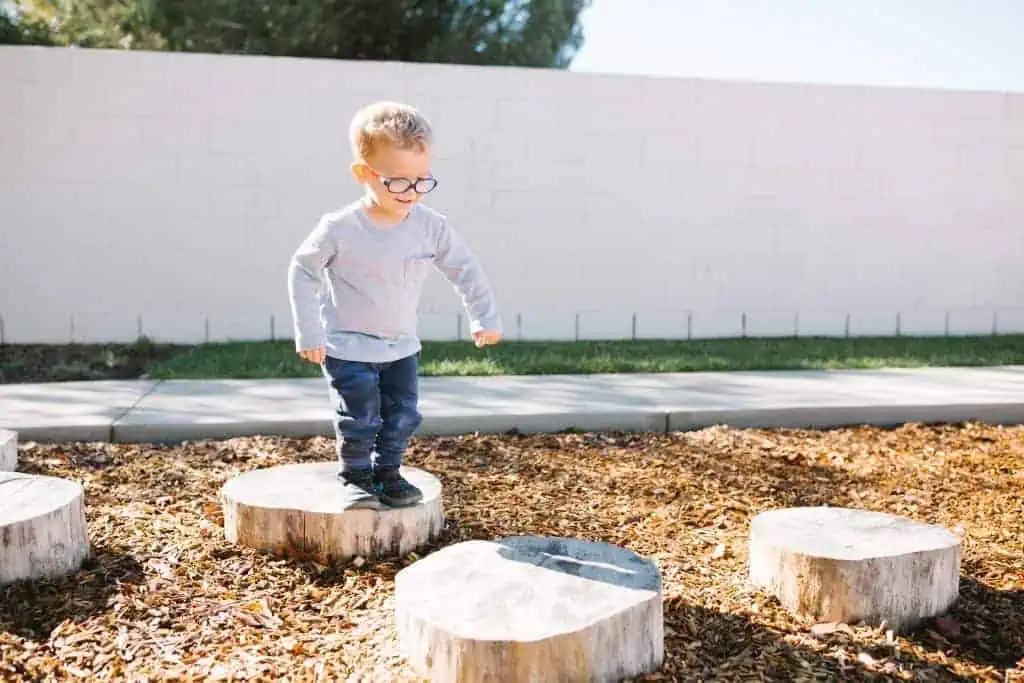
The first six years of life, what Montessori called the “first plane of development,” are not about racing ahead. They are about forming the architecture of the mind.
During this period, children are absorbing everything. Language, movement, order, social norms, patterns, beauty, numbers, cause and effect. Their brains are wiring at extraordinary speed.
Guidepost Montessori honors this window of development. Instead of rushing children into abstract academics before they are ready, we build skills in the right sequence, using hands on materials that make complex ideas concrete and understandable.
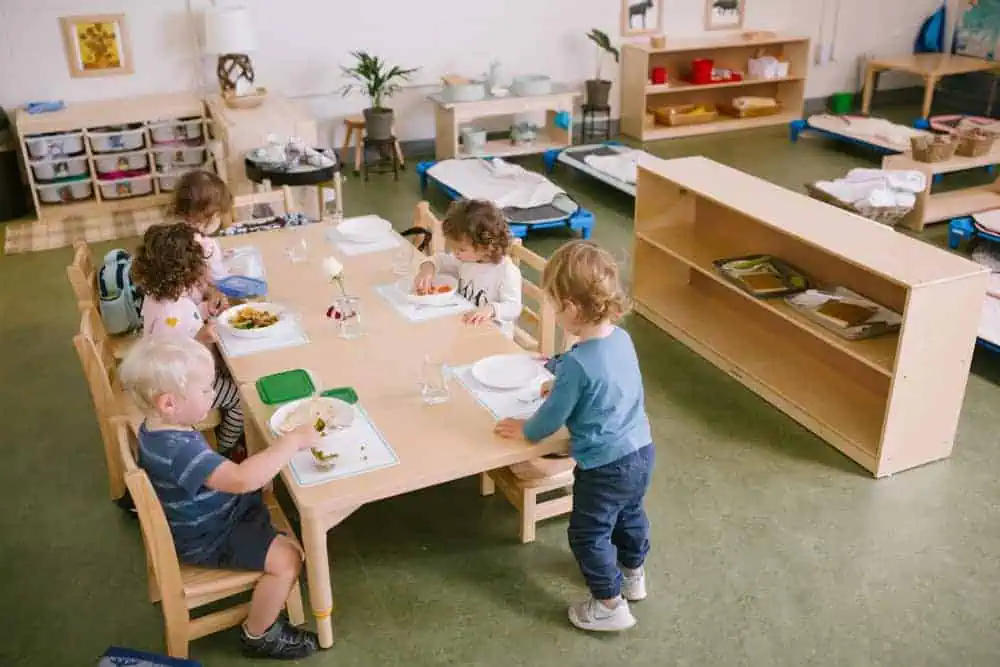
Everything in the classroom serves a purpose. The shelves. The materials. The rhythm of the day. The way children move freely and choose purposeful work. The way Guides observe before intervening.
It is calm.
It is intentional.
It is powerful.
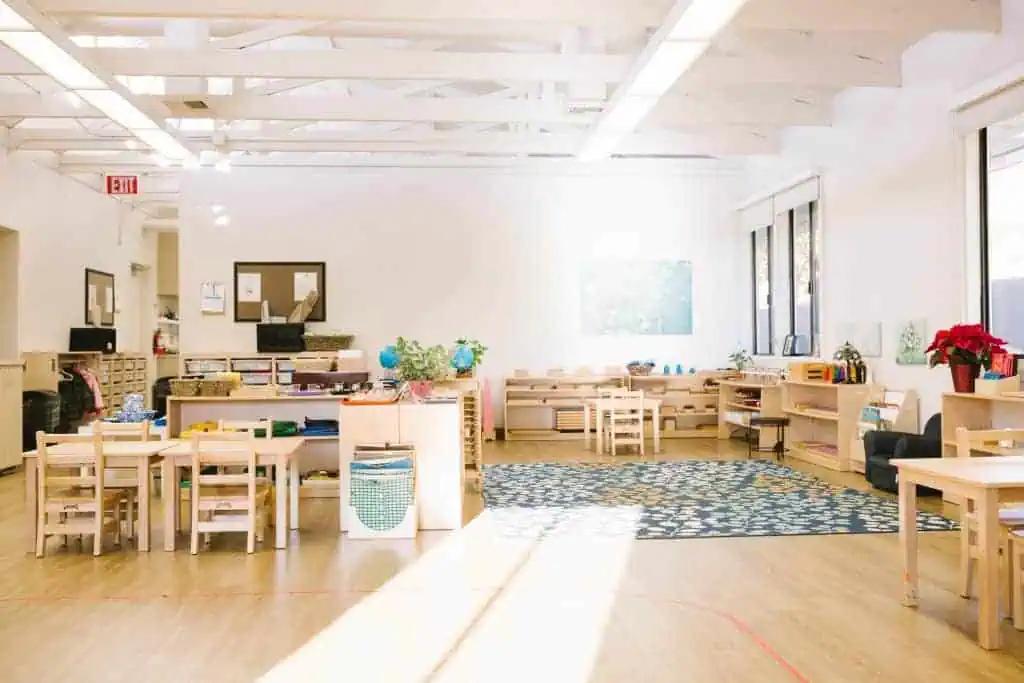
From Infancy Through Kindergarten: A Carefully Sequenced Journey
At Guidepost Montessori, your child moves through a thoughtfully designed progression across core areas of development:
- Language
- Mathematics
- Practical Life
- Sensorial Development
- Science
- Cultural Studies
- Fine Arts
- Grace and Courtesy
Each stage builds upon the one before it.
Let’s walk through what that actually looks like.
Nido: Ages 6 Weeks to 16 Months
The Foundation of Trust and Exploration
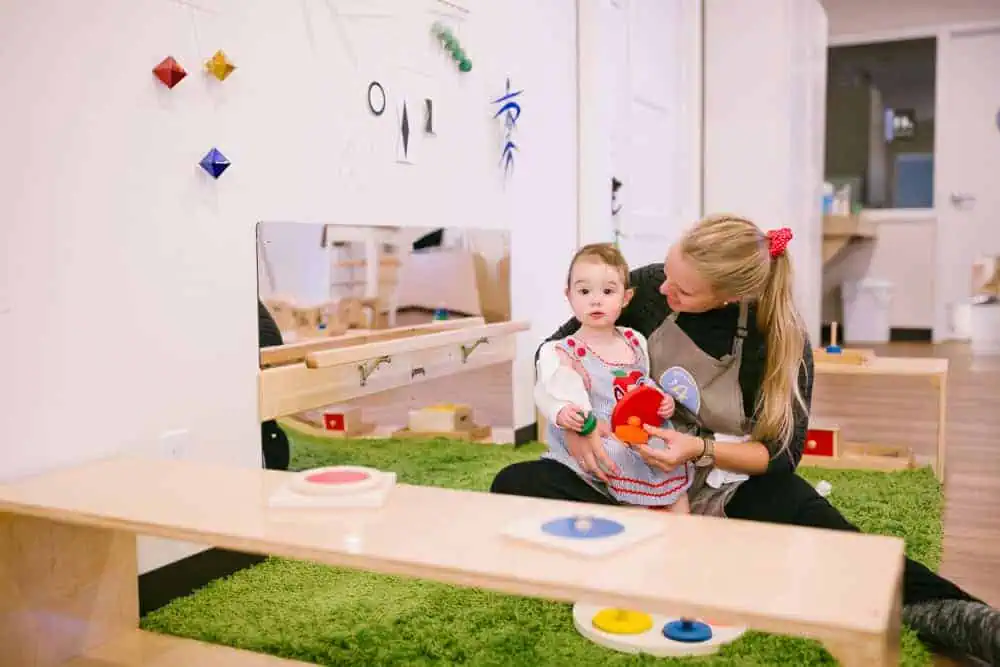
In the Nido environment at Guidepost Montessori, infants are treated with deep respect.
They are not rushed through transitions. They are not overstimulated. They are not placed in passive containers for long stretches of time.
Instead, they are given:
- Freedom of movement
- A carefully prepared space scaled to their size
- Language-rich interaction
- Gentle routines that build security
Your infant learns that the world is predictable and safe.
They develop:
- Gross motor coordination through movement on the floor
- Fine motor precision through grasping and exploration
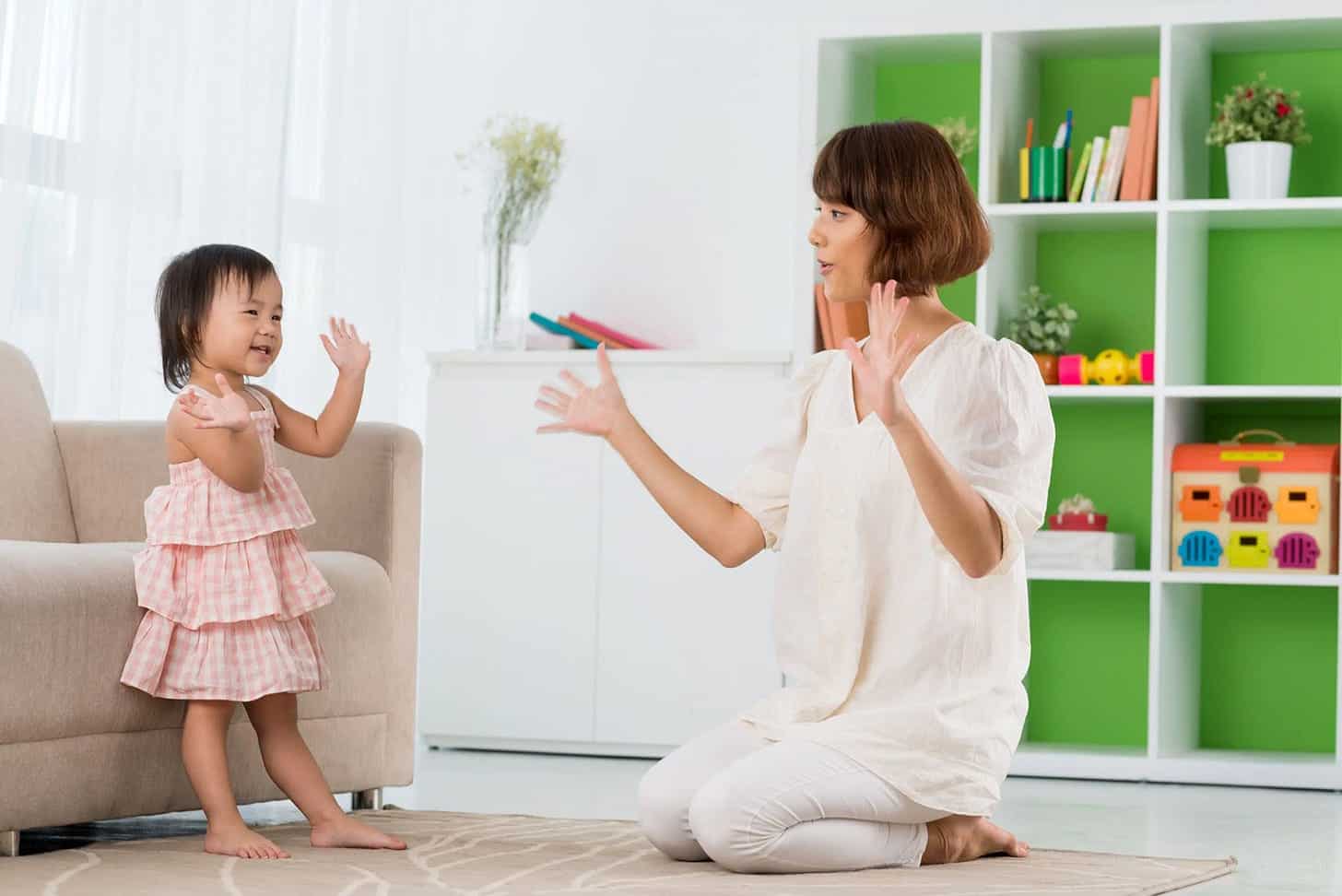
- Early language through constant conversation and song
- Concentration through focused sensory experiences
It may look simple from the outside. But this is where independence begins.
Toddler: Ages 16 Months to 2.5 Years
The Birth of Independence
Toddlers at Guidepost Montessori are not managed. They are empowered.
This is the age where children desperately want to say, “Help me help myself.”
We honor that.
In the toddler classroom, your child will:
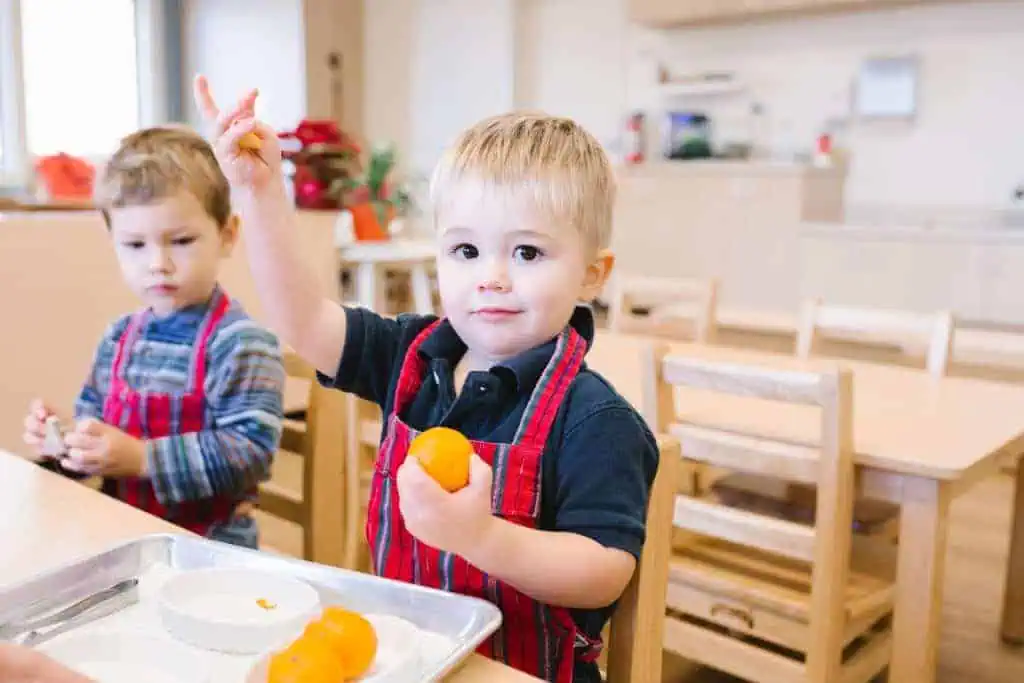
- Pour water from small pitchers
- Slice bananas with child-safe tools
- Wash tables
- Dress themselves
- Care for plants
- Sweep the floor
These are not busy activities. They are the heart of executive functioning development.
Through Practical Life work, toddlers build:
- Focus
- Hand strength
- Coordination
- Logical sequencing
- Confidence
Language explodes during this time. Vocabulary expands rapidly through storytelling, songs, rich conversation, and formal language games.
Math begins through pattern recognition, sorting, and quantity awareness.
Your toddler is not “just playing.” They are building neural pathways that support literacy and reasoning later on.
Children’s House: Ages 2.5 to 6 Years
Where Academic Mastery Blossoms
The Children’s House classroom at Guidepost Montessori is where parents often experience that moment of awe.
Because this is where everything comes together.
Language: Reading and Writing with Joy
At Guidepost Montessori, reading is not forced. It unfolds naturally through:
- Sound games that isolate phonemic awareness
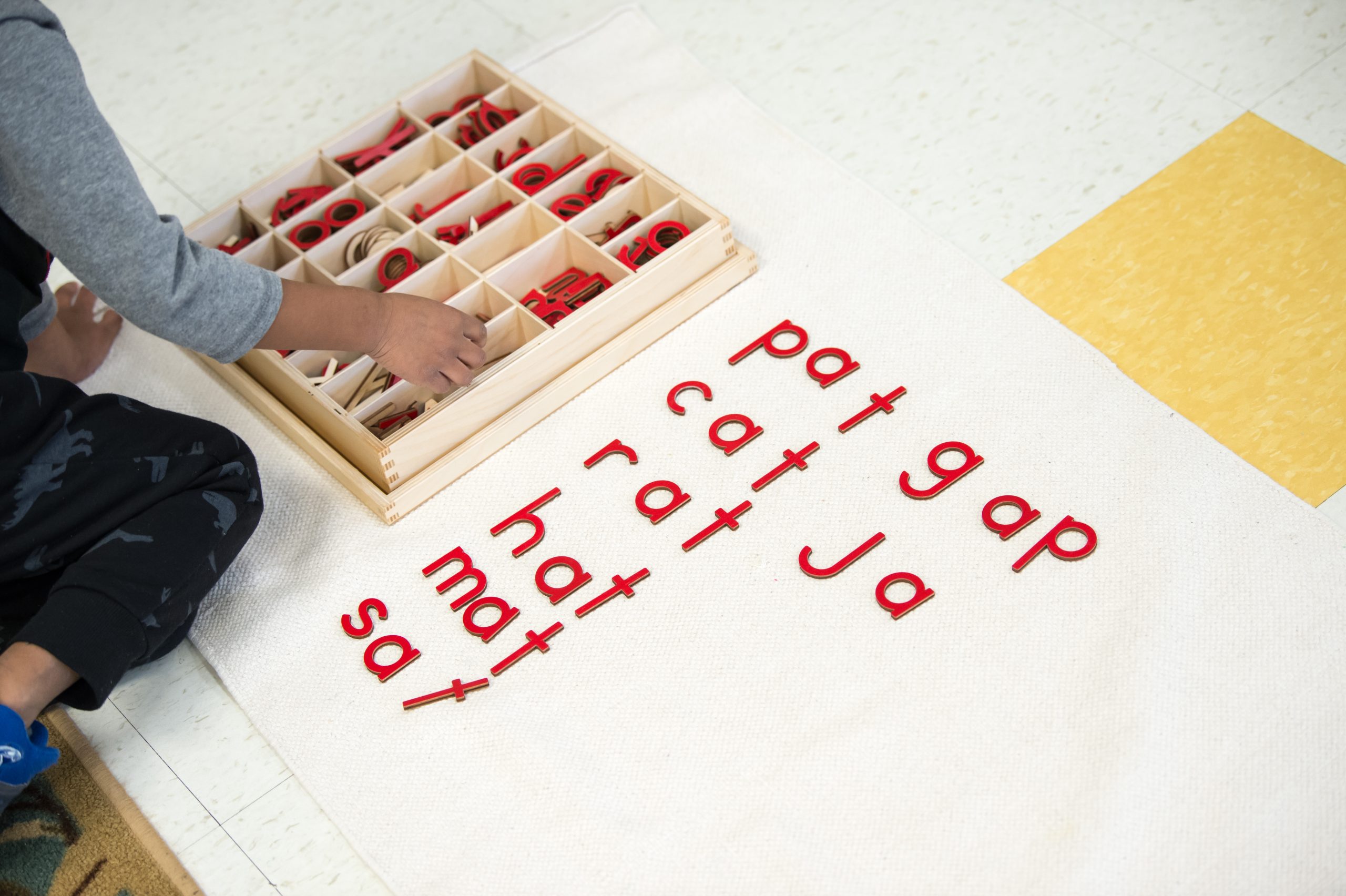
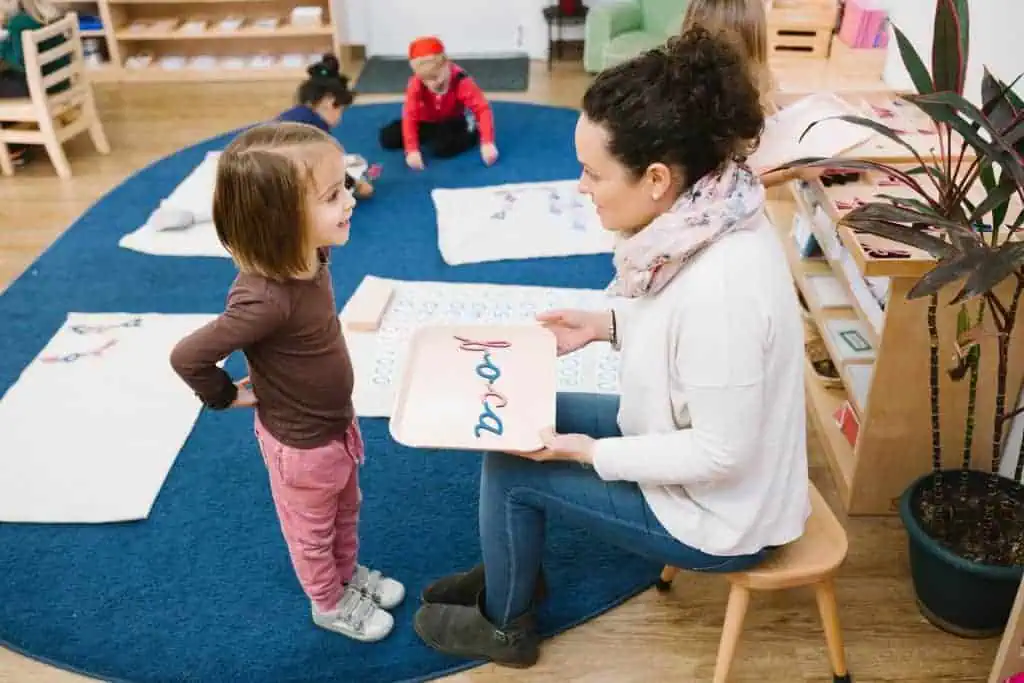
- Sandpaper letters that build muscle memory
- The movable alphabet, where children construct words before they can write them by hand
Most children begin reading and writing around age 4.5.
Not because they are drilled.
But because they are ready.
By age 5 to 6, children are:
- Writing full sentences
- Understanding grammar concepts
- Reading independently
- Expanding vocabulary with precision
And perhaps most importantly, they love to read.
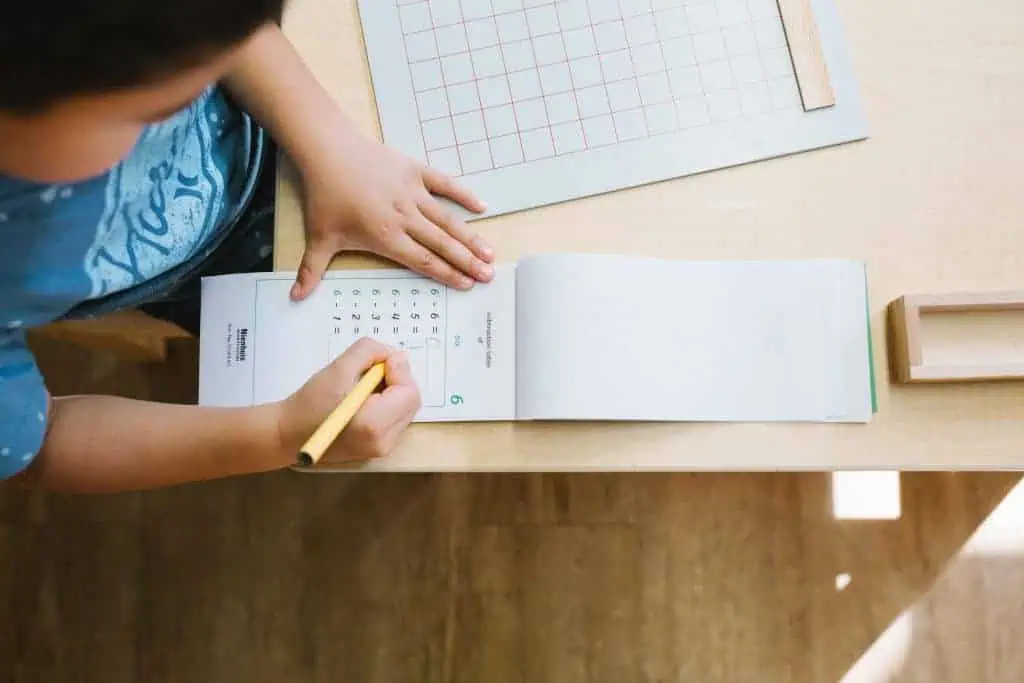
Mathematics: Understanding, Not Memorizing
The Montessori math materials at Guidepost Montessori are extraordinary.
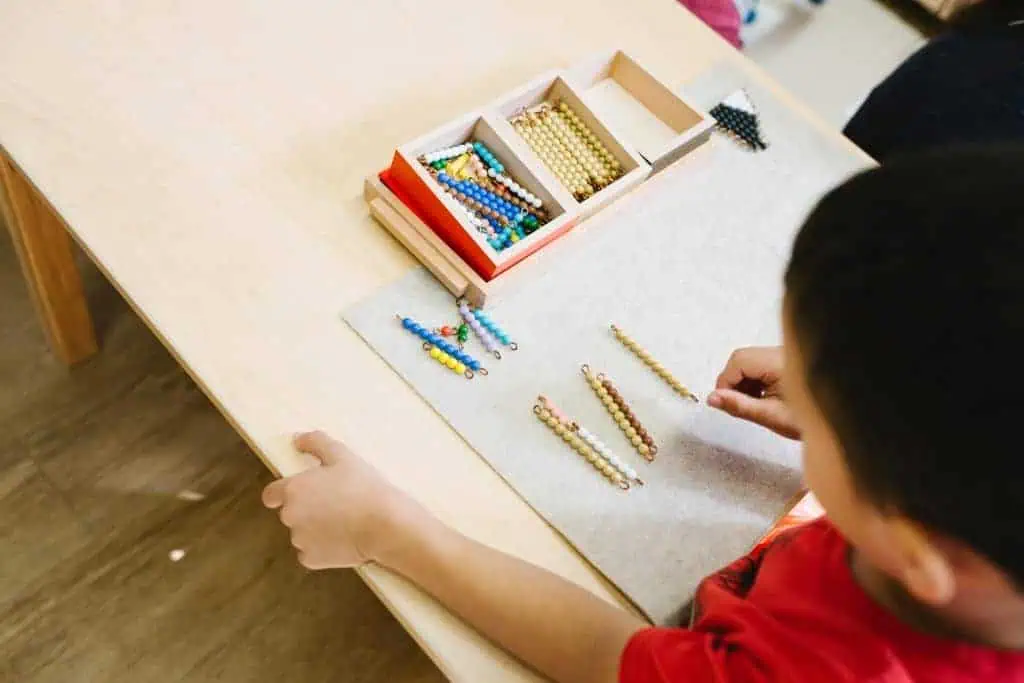
Children do not memorize abstract symbols before understanding what they mean. They handle beads, bars, cubes, and frames that represent quantity physically.
They learn:
- Counting with one-to-one correspondence
- The decimal system through golden beads
- All four operations with four digit numbers
- Dynamic addition and subtraction
- Early multiplication and division
- Introduction to fractions
Kindergarten students at Guidepost Montessori often perform operations years ahead of traditional peers.
But what truly matters is this:
They understand why math works. They aren’t learning number through rote memorization.
Practical Life: The Engine of Executive Function
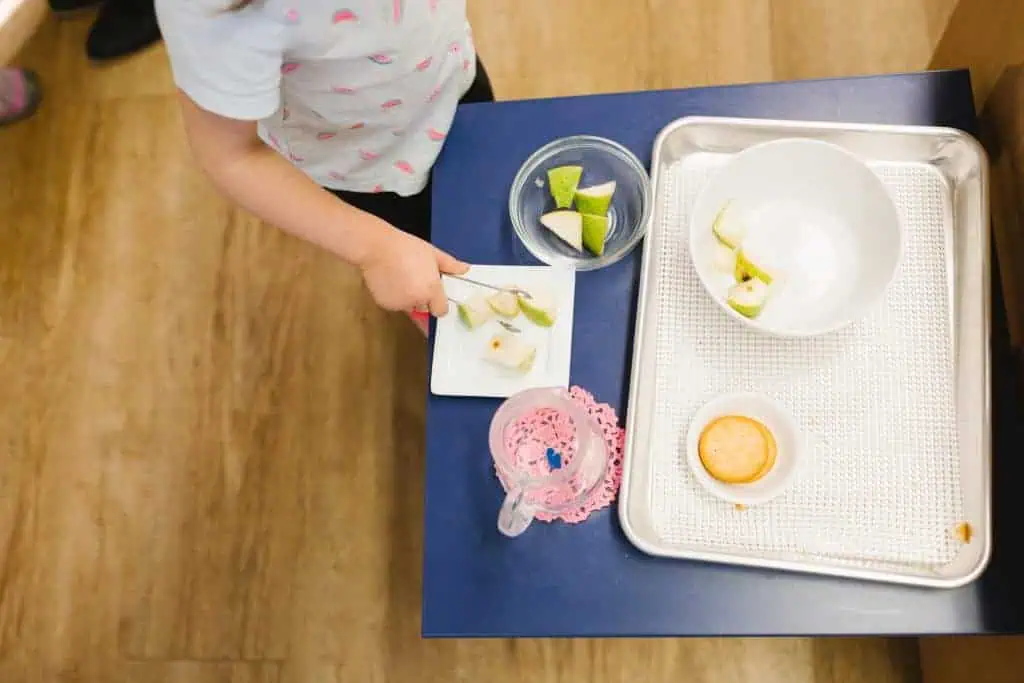
Practical Life remains central through age six.
Children:
- Prepare food
- Clean and care for their environment
- Organize their workspace
- Complete multi-step processes independently
These activities build executive functioning:
- Planning
- Sequencing
- Sustained attention
- Task completion
- Self regulation
These skills predict long term success more reliably than early academic acceleration alone.
Sensorial Development: Refining the Mind Through the Senses
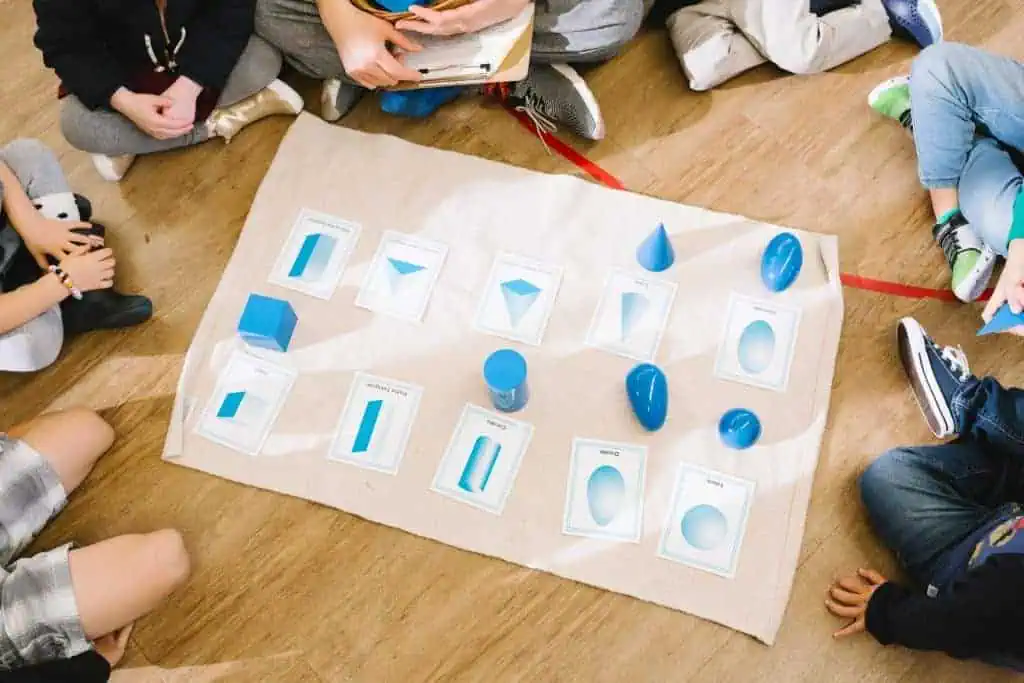
Children at Guidepost Montessori use materials designed to refine:
- Visual discrimination
- Auditory perception
- Tactile sensitivity
- Smell
- Taste
They grade objects from largest to smallest.
They distinguish subtle differences in color and sound.
They classify and categorize.
These sensorial experiences prepare the mind for advanced math and scientific reasoning.
Science and Cultural Studies: The Great Story of Humanity
In the early years, children ask “What?”
What is this?
What is that?
What is the world made of?
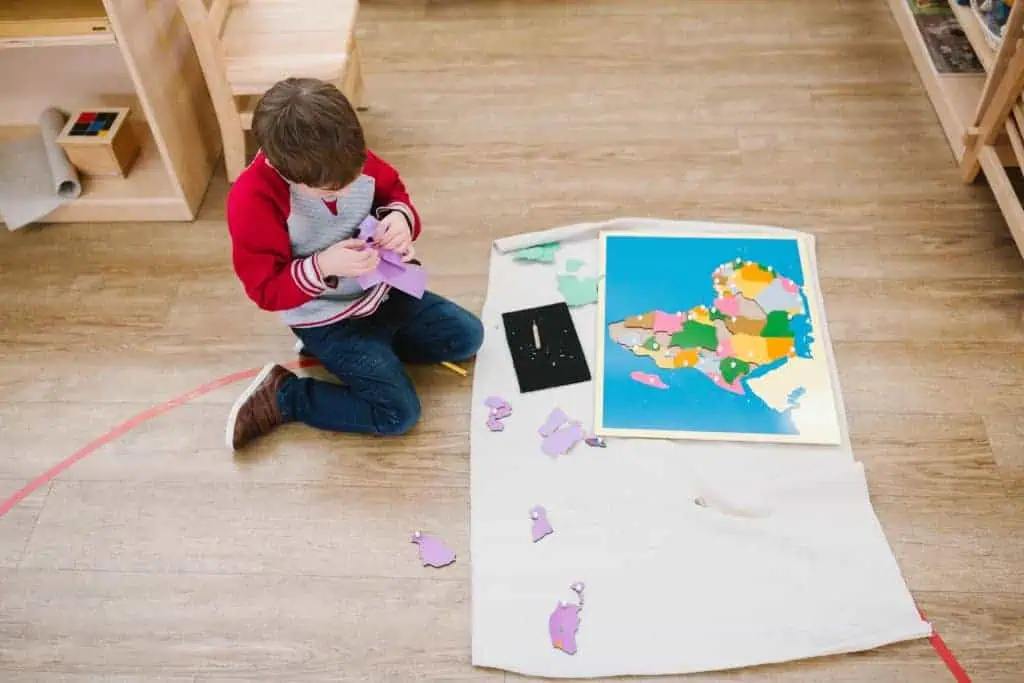
Guidepost Montessori introduces:
- Geography through puzzle maps
- Land and water forms
- Cultural geography
- Basic biology
- Pattern recognition
- Observation skills
Children begin to understand that they are part of something larger.
This foundation prepares them to later ask “Why?”
Grace and Courtesy: Social Intelligence in Action
At Guidepost Montessori, social emotional development is not left to chance.
Children receive explicit lessons in:
- How to interrupt politely
- How to offer help
- How to decline respectfully
- How to resolve conflict
- How to wait patiently
These lessons shape character.
Children learn that freedom and responsibility go together. They become capable members of a community.
How Progress Is Tracked at Guidepost Montessori
We do not rely on traditional grades.
Instead, Guides (teachers) observe each child carefully.
They track:
- Concentration patterns
- Skill acquisition
- Readiness for next challenges
- Emerging interests
Lessons are presented at the exact moment a child is prepared to receive them.
Parents receive transparency into this process. You understand not only what your child is learning, but what is coming next.
The result is meaningful progress without pressure.
What Families Can Expect
Children at Guidepost Montessori develop:
Strong Academic Foundations
- Reading fluency
- Mathematical mastery
- Rich vocabulary
Executive Function
- Focus
- Persistence
- Self control
- Problem solving
Social and Emotional Intelligence
- Respectful communication
- Empathy
- Collaboration
Confidence and Independence
- A child who believes, deeply, “I am capable.”
And perhaps the most powerful outcome:
A child who loves learning.
Designed for Lifelong Outcomes
Guidepost Montessori is not about producing children who perform well on a single test.
It is about raising grounded, capable humans.
Children who:
- Approach challenges with resilience
- Think critically
- Work deeply
- Care about others
- See themselves as contributors
In a world increasingly shaped by automation and AI learning, what remains distinctly human matters more than ever:
Judgment.
Creativity.
Empathy.
Concentration.
Initiative.
That is the promise we make to every child and every family.
This is what it truly means to be a Guidepost Montessori student.