Search for “Montessori holidays” and you will often find surface-level advice. Lists of what to avoid. Suggestions for alternative crafts. Brief explanations that reduce a rich educational approach to a few rules.
What is usually missing is the educator’s perspective.
At Guidepost Montessori, Montessori holidays are not treated as entertainment, interruptions, or themed activities. They are treated as part of a child’s education. Holidays, seasonal changes, and cultural observances are used as real-world reference points that help children understand how people live, gather, mark time, and care for one another.

What Montessori Means by Holidays
In Montessori education, holidays are not defined simply by parties or performances. They are moments of shared meaning. Seasonal changes. Cultural traditions. Community rituals.
Montessori holidays are guided by three non-negotiables:
- Respect for the child’s developmental stage
- Respect for cultural and family diversity
- Protection of the daily learning rhythm
Rather than centering holidays around consumption or spectacle, Montessori classrooms use them as context. A way to connect abstract ideas like kindness, responsibility, renewal, and community to concrete experiences children can understand.
This approach is not accidental. It reflects Montessori’s broader goal of helping children orient themselves within the real world.


The Prepared Environment and Montessori Holidays
In an authentic Montessori classroom, holidays do not take over the environment.
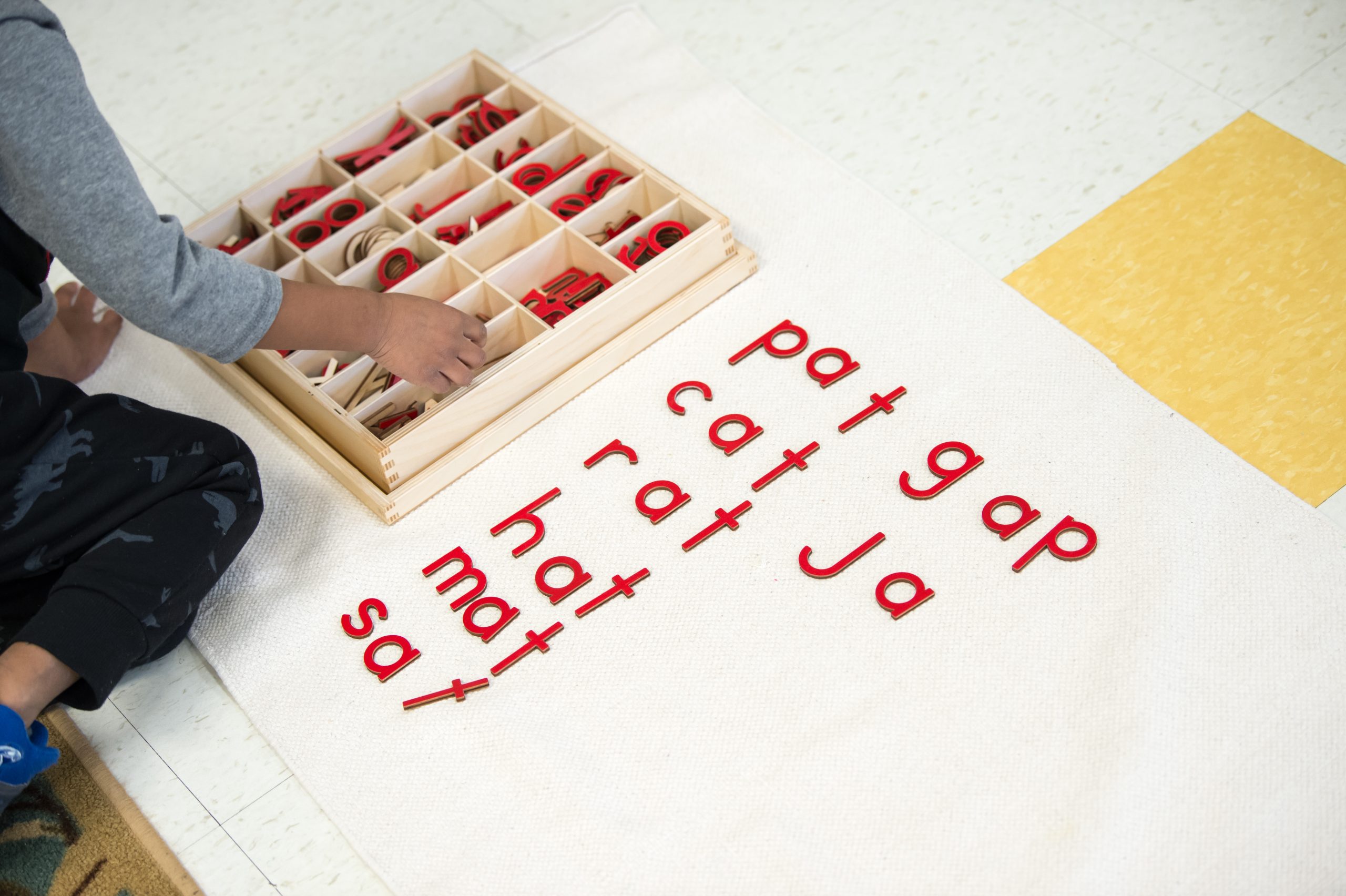
You will not see the shelves cleared for themed decorations or the learning materials replaced with crafts. Instead, the environment evolves subtly and deliberately.
A holiday may be reflected through:
- A new book added to the language area
- A cultural object created by students
- A practical life activity connected to the season
- A short group conversation that introduces context
The classroom remains calm, ordered, and familiar. Children still choose their work. Concentration is protected. The holiday becomes part of the environment rather than a disruption of it.
This matters because young children rely on consistency to feel secure enough to explore new ideas.

Montessori Holidays in the First Plane of Development (Ages 0–6)
Children in the first plane of development absorb information unconsciously. They are building their sense of order, language, movement, and social understanding. Montessori holidays at this stage are concrete, relational, and rooted in lived experience.
Rather than explaining holidays through abstraction, our educators connect them to things children can see, touch, and practice.
Valentine’s Day as Social Learning
In Montessori classrooms, Valentine’s Day is approached as a study of friendship and kindness, not romance or exchange.
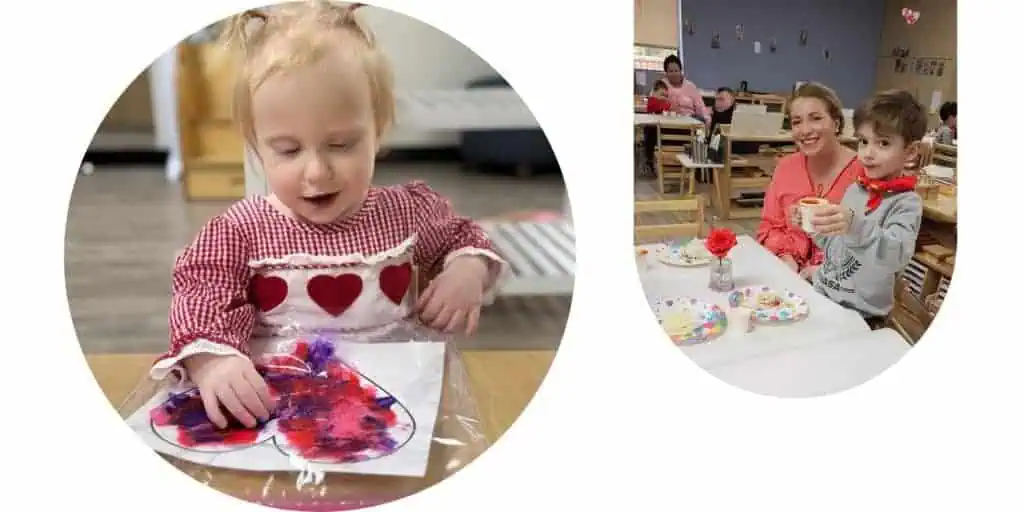
Children may practice offering kind words, observe grace and courtesy lessons, or talk about what it means to be a good friend. If notes or cards are shared, they are simple and inclusive.
The emphasis is on social awareness and respectful interaction. These are skills children carry into daily life, not just one day of the year.

Cultural Awareness
When observing Lunar New Year, Easter, or the arrival of spring, Montessori classrooms focus on curiosity rather than performance. Children may learn about family gatherings, symbols of renewal, and seasonal change through stories, objects, and hands-on experiences introduced with care, without positioning any culture or tradition as unusual or exotic.
The goal is normalization. Children learn that people around the world mark time differently, that celebrations take many forms, and that all traditions deserve respect.

Holi and Community
Holi is often misunderstood as a colorful event. In Montessori environments, it becomes a study of community and seasonal transition.
Children may explore color through art and sensorial materials, hear stories about celebration and togetherness, or talk about how communities welcome change. The learning remains grounded and purposeful, rather than overstimulating.
Earth Day and Responsibility
Earth Day aligns naturally with Montessori principles.
Rather than treating it as a single lesson, classrooms use it to reinforce ongoing practices. Caring for plants. Cleaning shared spaces. Talking about how we look after living things.
Earth Day is not presented as a special exception. It reinforces values already embedded in daily classroom life.

Why Montessori Holidays Protect Routine
One of the most noticeable aspects of Montessori holidays is what does not change.
The daily rhythm remains intact. Uninterrupted work cycles continue. Meals, rest, and outdoor play happen as usual.
This stability is essential. It allows children to engage with new ideas without becoming overstimulated or disoriented. The holiday is integrated into the day, not layered on top of it.
Montessori education understands that learning thrives within structure.

Inclusion and Montessori Holidays
Montessori classrooms are intentionally inclusive when it comes to holidays.
Not all children celebrate the same traditions. Educators avoid assumptions and use language that invites conversation rather than enforcing participation.
Children learn early that difference is normal. That families live in different ways. That curiosity is welcome and judgment is not.
This is one of the quiet strengths of Montessori holidays. They build empathy through lived experience rather than instruction.


Montessori Holidays as Education
Montessori holidays are not about avoiding joy. They are about placing joy within understanding.
They help children:
- Recognize community and shared values
- Develop empathy and cultural awareness
- Connect learning to real life
- Participate meaningfully rather than perform
This reflects the educational philosophy of Maria Montessori, who believed that education should prepare children for life, not just academics.
What Parents Can Expect
When Montessori holidays are practiced authentically, parents can expect experiences that feel calm, inclusive, and purposeful.
There may be fewer crafts and fewer performances. What replaces them is something more durable. Children who understand why people celebrate. Children who can talk about kindness, care, and community. Children who learn that the world is made up of many traditions, all worthy of respect.
Montessori holidays are not designed to impress. They are designed to educate.